Dr. Veselinović’s dental clinic consists of a team of dedicated, diligent and passionate professionals, educated to work in various areas of dentistry.
Periodontitis (also known as periodontal disease or pyorrhea) is a condition characterized by the gradual recession of the gums and exposure of the tooth roots.
If not stopped, this process will almost certainly lead to tooth loss.
Periodontitis is a degenerative and progressive disease that develops gradually and must be treated in order to protect the tooth-supporting apparatus.
To properly understand this serious condition, it is necessary to clarify some basic terms.
The supporting structure in which teeth are anchored is called the periodontium. These dental structures include the root, periodontal fibers (which connect the root to the jawbone), and gingiva (gums).
As periodontitis progresses, the periodontium is destroyed, the root becomes exposed, teeth become loose, and eventually fall out.
Periodontal disease most commonly occurs after the age of 40, and its causes vary:
irregular oral hygiene;
dental plaque and tartar;
genetic predisposition;
chronic diseases (diabetes, cardiovascular, rheumatic, respiratory, and kidney diseases);
hormonal changes;
medications and illegal drugs;
bruxism;
smoking;
older age;
unhealthy diet;
obesity;
stress, etc.
On the other hand, periodontitis can accelerate the progression of existing systemic diseases or increase the risk of stroke or dementia. It may also negatively affect pregnancy and fetal development. Therefore, it is essential to take oral health seriously and properly care for teeth and the oral cavity.
What is dental plaque and how does it affect periodontitis?
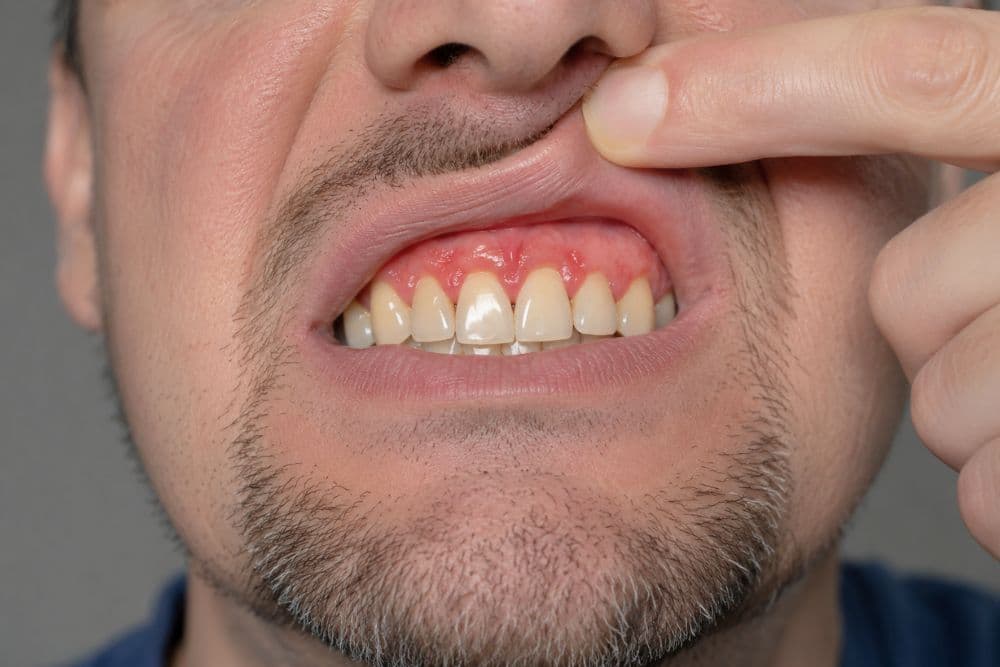
Plaque is a sticky film on the teeth formed due to inadequate oral hygiene or incomplete removal of food debris. Bacteria from food that remain on the tooth surface first affect the gingiva, causing inflammation (gingivitis).
Photo: AI
If neglected, gingivitis spreads below the gum line and reaches the tooth root. This leads to the formation of a periodontal pocket – a space between the root and the gum that no longer tightly adheres to it. The presence of periodontal pockets is the first sign of periodontitis.
Signs and symptoms of periodontitis
As mentioned, periodontitis develops gradually and can lead to serious destruction of the periodontal tissues and eventually tooth loss.
Early signs and symptoms to watch for include:
inflamed and swollen gums;
bleeding during tooth brushing;
occasional or constant tooth and/or gum pain when chewing or due to hot/cold stimuli;
receded gums and exposed tooth roots;
changes in tooth position when biting;
pus;
bad breath;
loose teeth.
Periodontitis is a silent disease whose early symptoms are mild and often painless, which is why it frequently goes unnoticed for a long time. Patients may even become accustomed to bleeding gums or bad breath and ignore mild discomfort.
However, these signs will not disappear on their own (just as dental caries). Therefore, it is essential to seek dental care as soon as possible.
The progression of periodontitis can be stopped with effective periodontal therapy. Causal or initial periodontal therapy involves thorough removal of hard and soft dental deposits (plaque and tartar) using ultrasound and manual instruments.
Unfortunately, non-surgical therapy cannot regenerate already lost periodontal tissues. However, its success lies in preventing further disease progression, which depends on early diagnosis. The earlier the disease is detected, the more periodontal tissue can be preserved.
In advanced cases of periodontitis, oral surgeons at the Dr. Veselinović Dental clinic can perform gingival recession surgery. The result of this surgical procedure is complete and long-term stable coverage of exposed tooth roots using an autograft.
As a natural stimulation of gingival tissue regeneration, modern periodontal surgical therapy may also include PRP (platelet-rich plasma).
It is important to emphasize that any form of periodontal therapy (non-surgical or surgical) is not aimed only at aesthetics, but primarily at restoring function and improving the overall health of the patient.
As with many diseases, prevention is key. With proper long-term oral care, periodontitis can be prevented and teeth can remain healthy for many years.
Photo: Magnific, Stockking
Preventive measures include consistent oral hygiene and regular dental check-ups.
Oral hygiene and periodontitis prevention
Proper oral hygiene is learned from an early age and should be practiced regularly (at least twice a day). Gentle brushing techniques are essential, as they not only remove food debris but also massage the gums. Soft-bristled toothbrushes and gentle circular motions are recommended to avoid damaging the gums and enamel.
Photo: Canva
An important part of prevention is also the use of dental floss and interdental brushes after each brushing. These tools are widely available and significantly improve the removal of food debris and plaque from all tooth surfaces.
Since plaque and tartar cannot always be completely removed at home, professional dental cleaning is recommended twice a year. During these visits, the dentist will also assess oral health and provide guidance for improvement if needed.
Dr. Veselinović Dental clinic in the fight against periodontal disease
Like other diseases, periodontitis requires timely intervention and professional treatment. If left untreated, it will continue to worsen and eventually lead to tooth loss.
Untreated gum disease can also negatively affect overall health, as periodontitis is associated with cardiovascular diseases such as stroke and myocardial infarction.
[…] the patient has teeth that cannot be saved because of advanced periodontitis, extensive damage, or other reasons, the dentist extracts them immediately before placing the […]




Comments
[…] Read more: Periodontitis – Causes, symptoms and treatment >> […]
[…] periodontitis (periodontal disease), which leads to tooth loosening and tooth loss; […]
[…] Read also: Periodontitis – Causes, symptoms and treatment >> […]
[…] the patient has teeth that cannot be saved because of advanced periodontitis, extensive damage, or other reasons, the dentist extracts them immediately before placing the […]