Dr. Veselinović’s dental clinic consists of a team of dedicated, diligent and passionate professionals, educated to work in various areas of dentistry.
Gingival recession is the loss of soft and hard tissues in the mucogingival region. Excessive gum recession and exposure of the root surface of one or more teeth cause increased root sensitivity to external stimuli.
In addition, it has a significant negative impact on the appearance of the smile and, if left untreated, may eventually lead to tooth loss. Although gingival recession is a complex condition, it is treatable. In advanced cases, surgical intervention is the only effective solution.
In the following sections, we will explain the surgical treatment of gingival recession and illustrate the procedure with photographs from our dental clinic.
How does gingival recession develop and what are its symptoms?
Gingival recession is a common condition – affecting as many as 88% of people over the age of 65. The causes of excessive gum recession may include:
improper oral hygiene (aggressive brushing or inadequate oral care leading to plaque and tartar accumulation);
congenital anatomical factors (e.g., alveolar bone deformities);
harmful lifestyle habits (smoking, drug use), and others.
When it comes to the signs and symptoms of gingival recession, patients most commonly report that their teeth appear „longerˮ or larger than before. They also notice increased tooth sensitivity, sometimes experiencing pain even when breathing in cold air. Especially while eating or brushing their teeth.
These unpleasant symptoms are usually the reason why patients seek our help.
We emphasize: early diagnosis and timely treatment are essential for preventing long-term damage to the teeth and supporting structures.
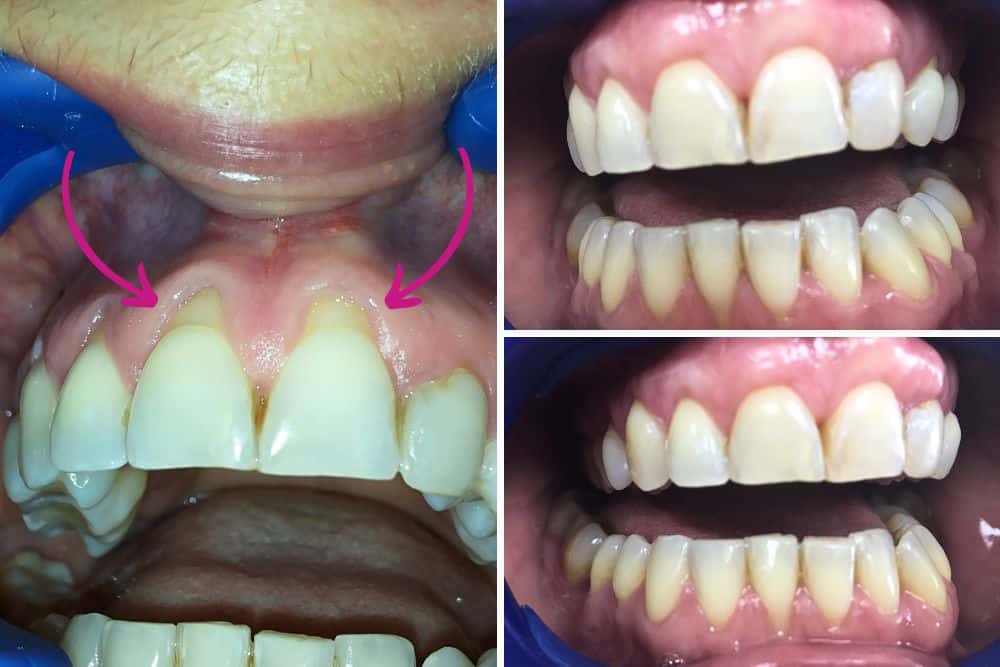
A variety of gingival defects involving the shape, position, and volume of the gum tissue can be corrected through a combination of surgical procedures, restoring its natural anatomy.
Photo: Dr. Veselinović Dental clinic, gingival recession – BEFORE and AFTER
The goal of surgical treatment is to achieve complete, long-lasting, and stable coverage of the exposed tooth root.
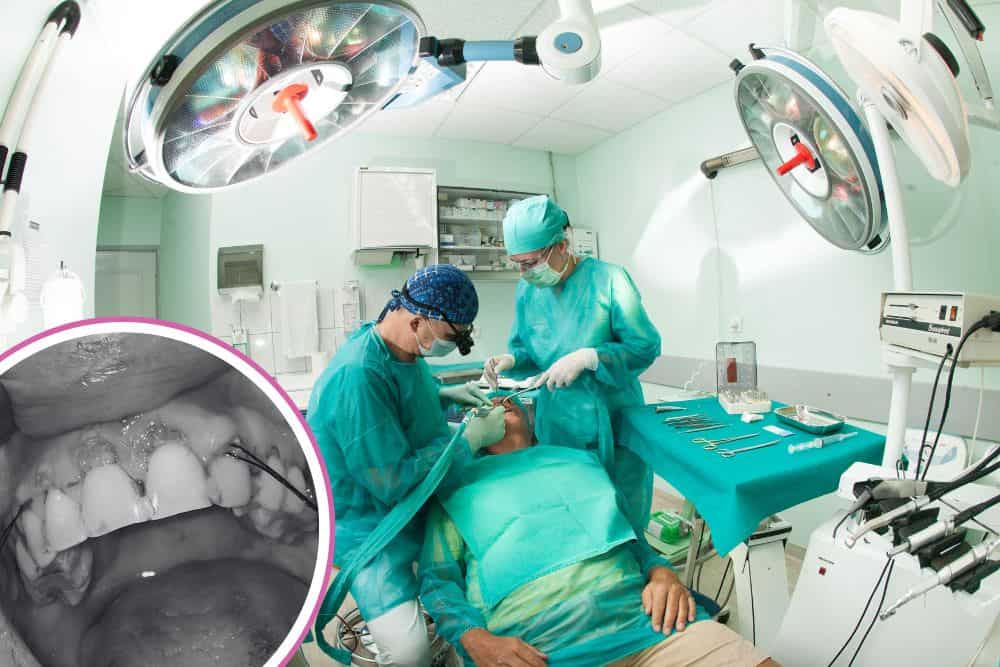
In the treatment of our patient’s gingival recession, performed under local anesthesia, we used the tunnel technique. This is a reliable surgical method commonly used for the treatment of multiple gingival recessions. Combined with an autogenous connective tissue graft and a collagen matrix for tissue regeneration, this approach provides outstanding clinical and aesthetic results.
Case description – Connective tissue graft
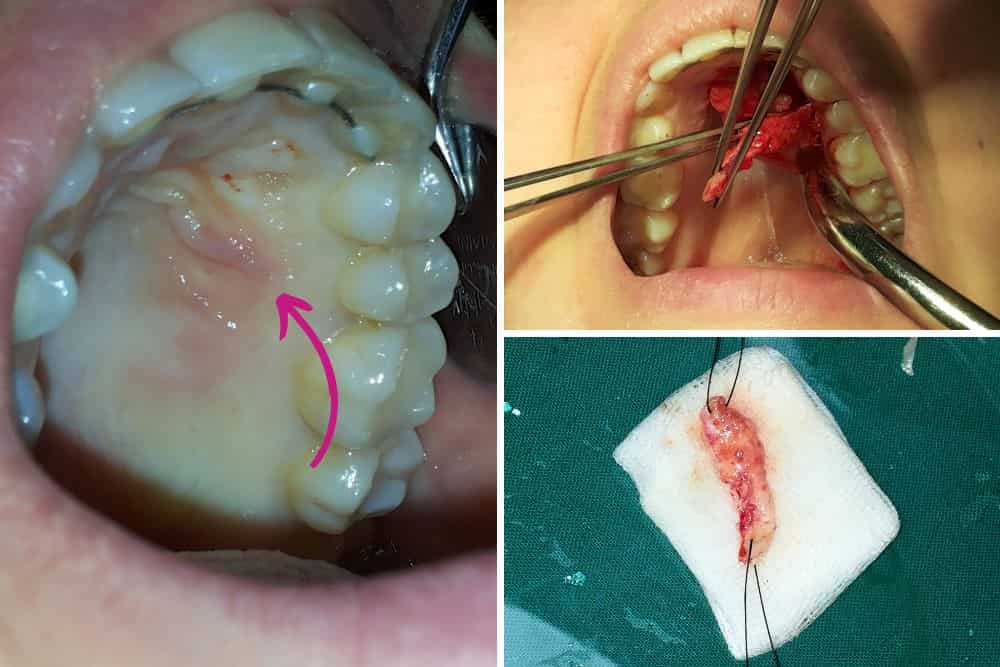
The first step of the procedure involved harvesting a subepithelial connective tissue graft (SCTG) from the patient’s palate.
Photo 1 shows the donor site, where a partial-thickness connective tissue graft, without the epithelial layer, was obtained from the palatal mucosa.
Photo: Dr. Veselinović Dental clinic – Donor site, soft tissue harvesting, and graft preparation
Figure 2 shows the donor site after tissue harvesting, while Figure 3 presents the prepared graft ready for placement.
Mucogingival surgical procedure
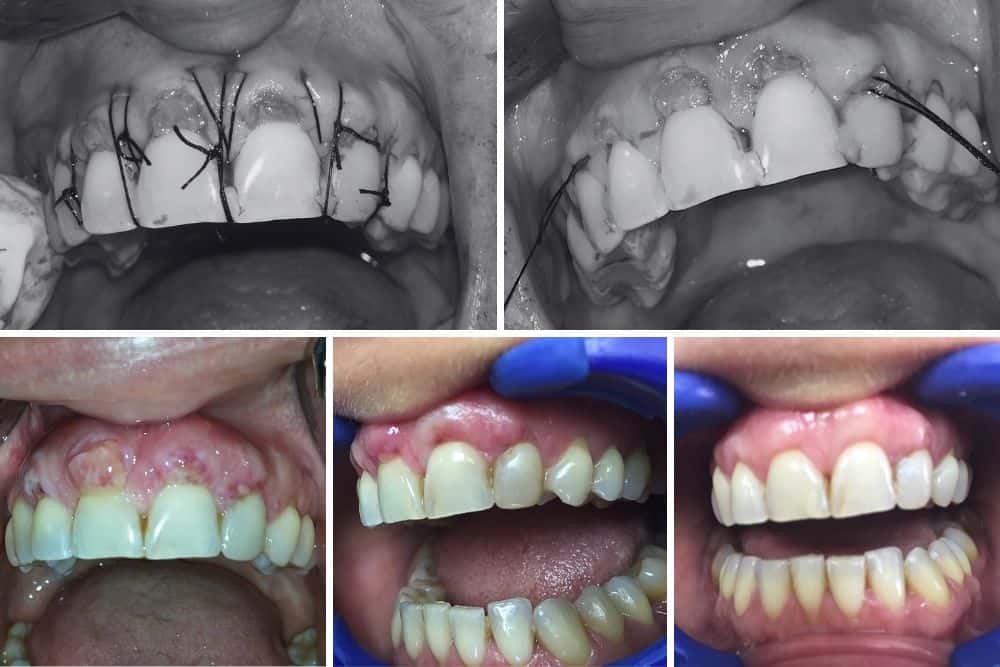
The second phase of the treatment consisted of placing and suturing the connective tissue graft into the prepared recipient site (Figures 1 and 2).
Photo: Dr. Veselinović Dental clinic, gingival recession – Surgical procedure and postoperative condition
Following the procedure, two surgical wounds were present – one at the palate (donor site) and one at the recession site (recipient site). Both healed simultaneously and relatively quickly.
Gingival recession – Postoperative recovery and results
Figure 3 in the collage above shows the condition after 7 days, while Figures 4 and 5 demonstrate complete healing of the gingival tissue six weeks after surgery.
Although the postoperative healing period may seem lengthy, there is no reason for concern. The final results fully justify the treatment:
complete restoration of healthy gingival tissue;
prevention of future tooth loss;
excellent aesthetic outcome;
no recurrence, provided that proper oral hygiene is maintained.
Oral surgeons at Dr. Veselinović Dental clinic – True Friends of Your Teeth!
To conclude, gingival recession is a progressive condition that will eventually lead to tooth loss if left untreated. For this reason, it should never be ignored. Proper oral hygiene and regular dentalcheck-ups (at least twice a year) remain the most effective way to prevent oral diseases and maintain healthy teeth and gums.
Professional preventive procedures, such as plaque and tartar removal, also play a crucial role in preserving oral health. If a dental problem is diagnosed, our oral surgeons will make every effort to resolve it using the most effective and modern treatment methods available.
Schedule your dental examination today and find out the condition of your teeth and surrounding gum tissue before complications develop.

Comments
[…] Read more: Gingival recession – Surgical treatment of excessively receded gums >> […]