Dr. Veselinović’s dental clinic consists of a team of dedicated, diligent and passionate professionals, educated to work in various areas of dentistry.
Frenectomy (frenulum surgery / frenulectomy) is a surgical procedure used to correct the abnormal attachment of the lip frenulum to the gums. This condition most commonly affects the upper lip, but it can also occur on the lower lip, the tongue, and the inner cheek tissues.
In this article, we focus on upper lip frenectomy.
What Is the upper lip frenulum and when does It become a problem?
The labial (lip) frenulum is a thin fold of mucosa located above the front teeth, composed of muscle and connective tissue fibers. The frenulum connects the inner side of the upper lip with the alveolar mucosa, gingiva, and periosteum. Its primary function is to stabilize the lip and control its movement during speech, chewing, and facial expression.
This is a completely normal anatomical structure present in every person. However, the shape, thickness, and attachment position of the frenulum can vary significantly.
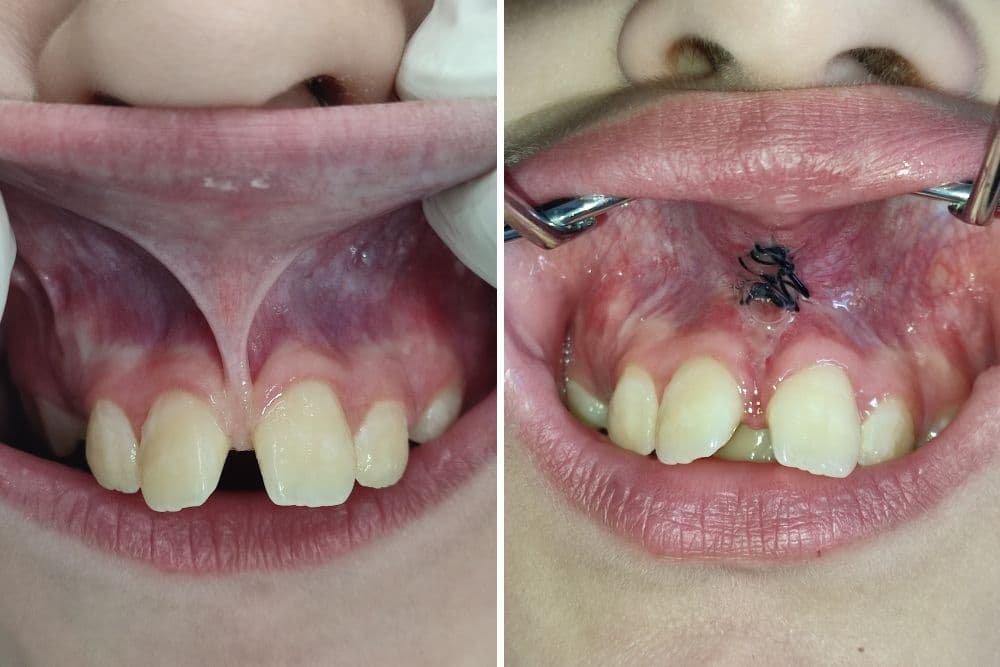
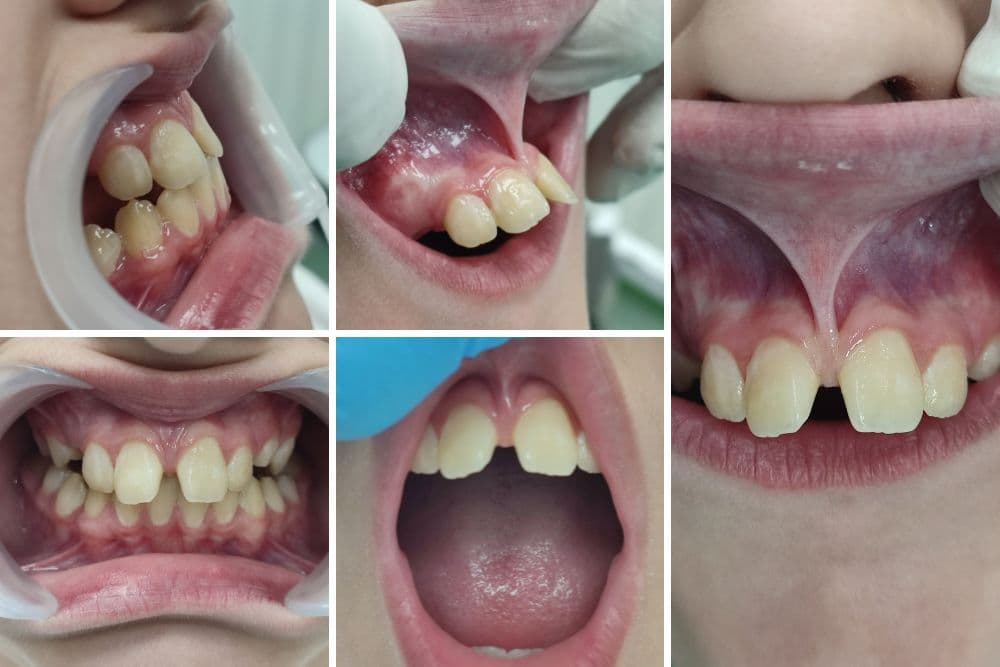
Photo: Patient at Dr Veselinović dental clinic – condition before frenectomy
When the frenulum is excessively developed, thickened, abnormally short, tight, or positioned too low between the front teeth (incisors), it can become a functional, aesthetic, and medical problem.
Frenectomy is not performed in all patients, but only when one or more of the following indications are present:
Gap between front teeth (diastema)
When the upper central incisors erupt with a large gap, bone formation under the frenulum fails to develop properly. This leads to a V-shaped bone defect between the teeth and abnormal frenulum insertion.
A thick or tight frenulum prevents the incisors from coming together and may interfere with orthodontic treatment, sometimes causing teeth to return to their previous position after therapy.
Obstacles in orthodontic treatment
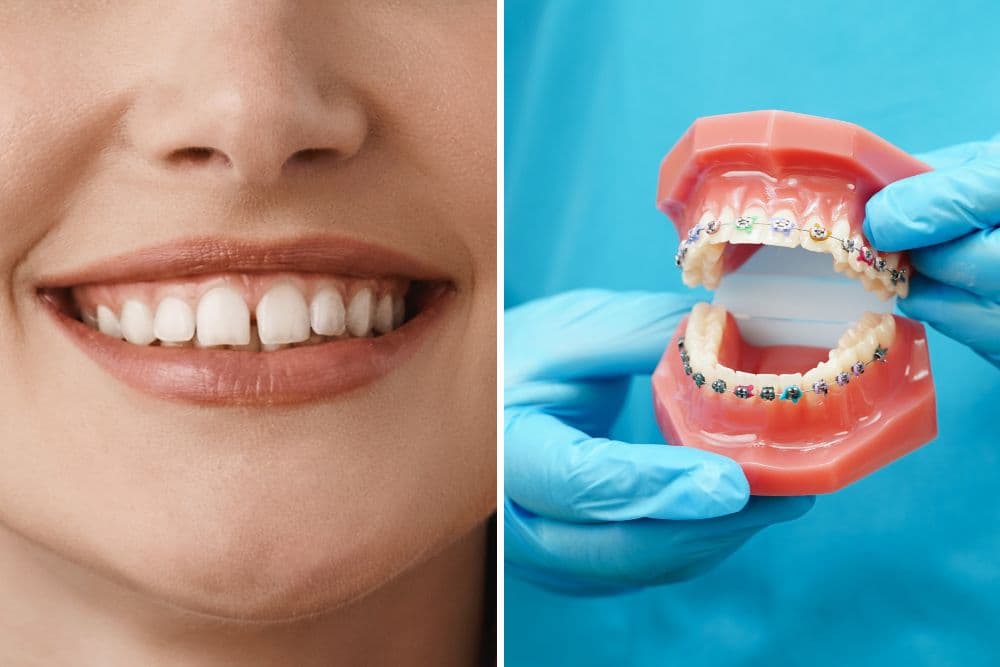
In patients wearing fixed braces or aligners, a low-attached frenulum can mechanically hinder tooth movement. In some cases, orthodontic therapy cannot achieve stable results without surgical intervention.
Gum recession (gingival recession)
When the frenulum attaches too close to the gum margin, it can cause gingival recession due to excessive pulling forces. This may contribute to periodontal disease or worsen an existing condition.
Difficulties with dental prosthetics
In elderly patients, a pronounced frenulum can interfere with the stability of removable dentures and cause discomfort or pain.
Hygiene and functional problems
An abnormally developed frenulum can make oral hygiene difficult or even prevent proper cleaning of the teeth with a toothbrush or tongue. It can also restrict upper lip movement, affecting speech, eating, and facial expression.
We emphasize that frenectomy is especially important for patients with the following serious functional issues:
In children, dentists often wait for permanent teeth to erupt, as the gap between incisors may close spontaneously. However, in infants, a severely tight frenulum can represent a serious functional problem because it interferes with breastfeeding or bottle feeding.
Frenectomy is most commonly performed:
in infants with feeding difficulties (urgent treatment within the first weeks after birth);
between ages 10–12 (after eruption of permanent teeth);
in adults of any age when indicated.
In orthodontic practice, frenectomy is often recommended during or after orthodontic treatment (fixed or removable appliances) to prevent relapse of tooth spacing.
In summary, the upper lip frenulum is a small but functionally important structure. When properly developed, it causes no issues. However, when it is too prominent or abnormally positioned, it can affect smile aesthetics, tooth position, and gum health.
The purpose of frenectomy is to release the frenulum to eliminate the negative effects of abnormal lip-to-gum attachment, enabling normal movement, proper function, and healthy facial development.
Frenectomy is a fast, safe, and effective procedure often used as a complement to orthodontic therapy or as a solution for functional impairments.