Dr. Veselinović’s dental clinic consists of a team of dedicated, diligent and passionate professionals, educated to work in various areas of dentistry.
Lip bumper is a type of semi-functional orthodontic appliance designed to separate crowded teeth in the lower jaw without pressure from the lips and cheeks.
When teeth are excessively crowded, what treatment options are available?
If there is a significant discrepancy between the size of the teeth and the width of the jaw (minimal space in the lower dental arch), there are two treatment options:
expansion of the dental arches through orthodontic therapy.
The treatment approach depends on the condition of each individual patient, and the orthodontist will always recommend therapy according to the patient’s best interest.
Lip bumper as an addition to fixed braces
To expand the jaw, correct tooth position, and improve bite irregularities, fixed braces or aligners are sometimes not sufficient. In other words, they would not achieve the expected results if used alone.
Some patients require additional specialized appliances to enhance the effectiveness of braces / aligners or to shorten the duration of treatment. One of these appliances is the lip bumper.
Orthodontists use this appliance when orthodontic therapy (before or during fixed braces treatment) aims to achieve:
reduction of crowding of the lower front teeth and their forward inclination (creating more space in the anterior part of the mandible);
increasing the size of the dental arch;
distalization, i.e., moving permanent lower molars backward to stabilize and maintain anchorage for fixed braces.
What does a lip bumper look like and how is it placed in the mouth?
As previously mentioned, a lip bumper acts as a buffer or shield for soft tissues (lips and cheeks), which are in direct contact with the teeth and influence their position.
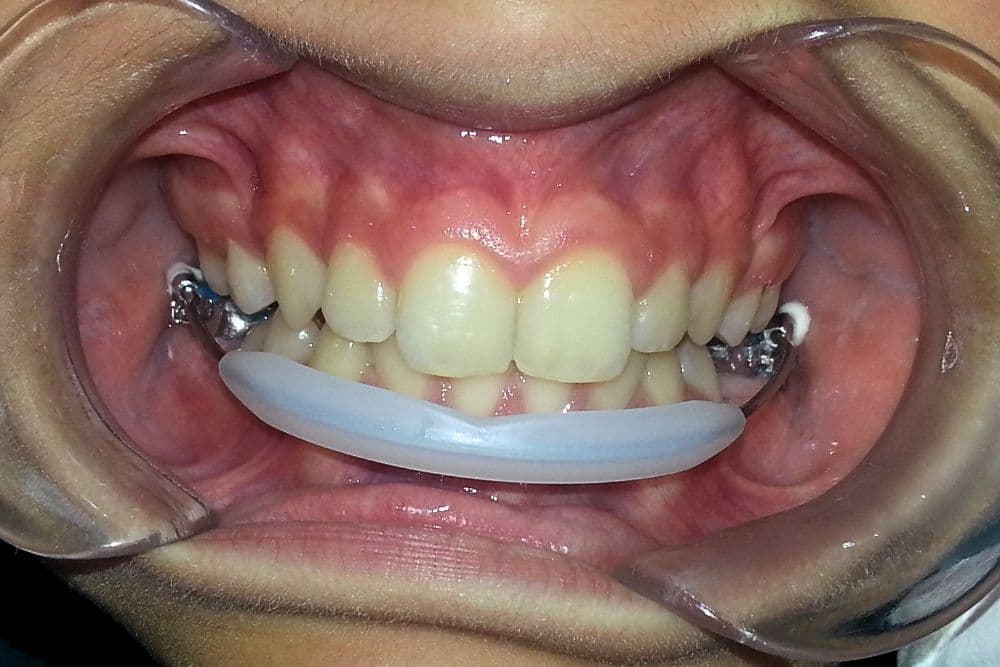
The lip bumper has an arch shape and is flexible enough to follow the contours of the jaw, gums, and teeth. The lip bumper wire is positioned on the outer side of the lower dentition, behind the lip. It remains 1.5–2 mm away from the front surface of the anterior teeth.
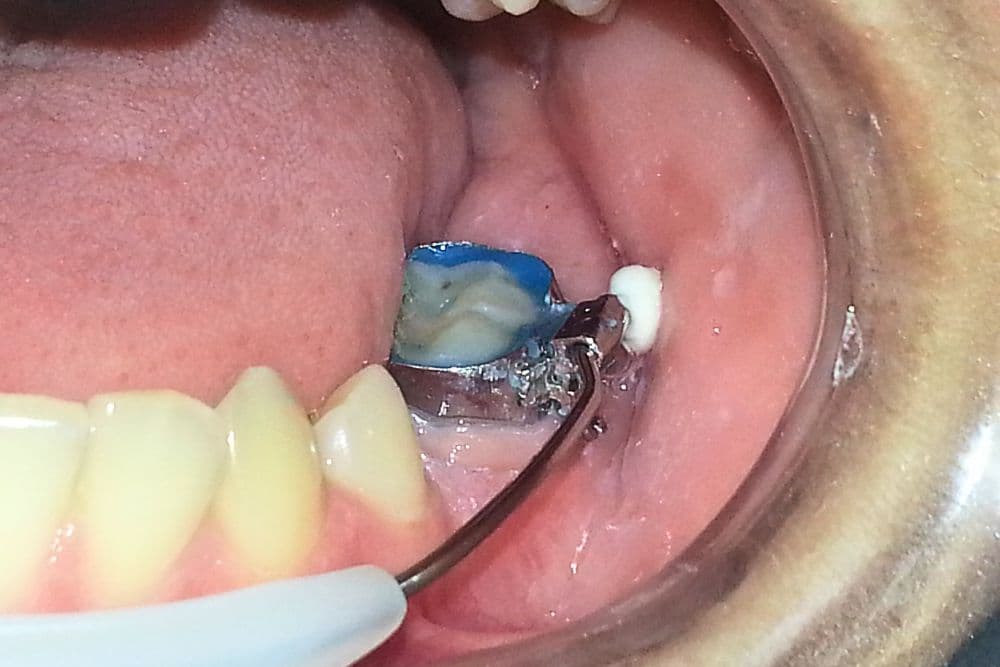
The orthodontist attaches this appliance to the left and right molars (first permanent molars) using metal bands. This provides stability while also allowing better control over tooth movement.
Photo: Dr. Veselinović Dental clinic
Molars can shift due to the eruption of wisdom teeth and neighboring molars. The lip bumper helps maintain their position or preserve space until fixed braces therapy begins (if it precedes it).
What materials is it made of?
The material typically used to manufacture a lip bumper is medically certified stainless steel.
The front part of this appliance is covered with plastic material that follows the contour of the lips and prevents direct contact between the metal and the sensitive inner tissues of the lips and cheeks. This helps prevent potential tissue damage caused by friction against the metal.
Maintaining lip bumper hygiene
The lip bumper you should clean in the same way as teeth: with a toothbrush, toothpaste, and water.
As with fixed braces, it is extremely important to consistently remove plaque accumulated throughout the day using gentle movements and to prevent excessive plaque buildup. You should pay special attention to areas facing the gums, where food and drink residues are more likely to accumulate.
Why is a lip bumper so important and how long is it worn?
Orthodontic specialists recommend placing a lip bumper before the complete transition from primary to permanent teeth occurs.
Treatment usually lasts 6–12 months, and regular wear is essential for successful results. Patients usually wear the lip bumper 24 hours a day, every day of the week, except during meals and oral hygiene routines.
Although children do not always enjoy wearing it, parents need to remain persistent and encourage them to use the appliance according to the orthodontist’s instructions.
This is because the lip bumper plays an important role in the functional and aesthetic treatment of teeth.
Perfectly aligned teeth are not only attractive from an aesthetic perspective. Their proper alignment is primarily important for health. It makes cleaning easier and reduces the risk of developing cavities and other dental diseases. It also benefits the alveolar bone, jaws, and the oral cavity as a whole.
In addition, chewing forces are evenly distributed when all teeth are properly aligned. Significantly reducing pressure on the neck and jaw muscles.
Every specific case can be resolved in just three steps:
consultation – during a specialist examination at Dr Veselinović Dental clinic, you will receive professional advice on the best treatment approach;
planning – after CT / 3D imaging, an individualized and most appropriate treatment plan for your child will be recommended;
treatment – once you agree with the treatment plan, appointments are scheduled and therapy begins.
Photo: Dr. Veselinović Dental clinic
If your child is at the age when teeth are already changing and has problems with tooth arrangement or position, schedule an examination with Dr Jasna Veselinović, a specialist in jaw orthopedics.


Comments
[…] Read also: How does a lip bumper work? >> […]