Dr. Veselinović’s dental clinic consists of a team of dedicated, diligent and passionate professionals, educated to work in various areas of dentistry.
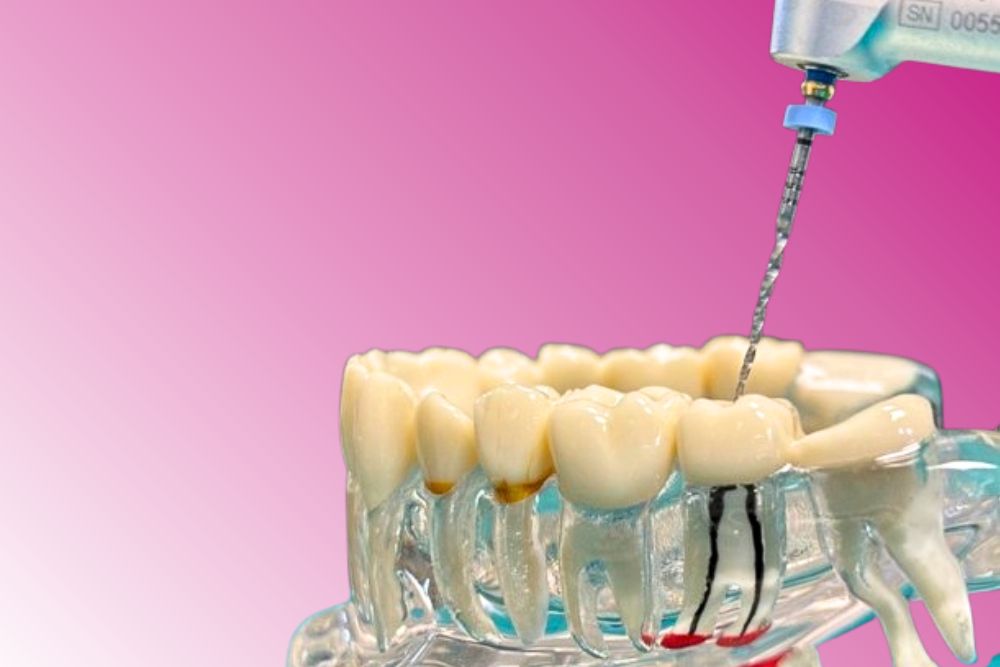
Endodontic therapy refers to root canal treatment performed using specialized instruments and advanced equipment.
Thanks to modern technology, infected tissue is removed mechanically with minimal impact on the surrounding tooth structures. This approach also provides greater comfort and higher treatment quality.
When is mechanical endodontic therapy recommended?
Endodontic therapy (also known as root canal treatment) is recommended when tooth decay spreads from the enamel (through the dentin and pulp) to the tooth root.
Simply put, when oral hygiene is neglected, a tooth begins to decay. If the cavity is not treated promptly, it continues to progress and affects the deeper layers of the tooth. The infection first reaches the dentin and then the pulp, which lies directly beneath it. The pulp contains the dental nerve, so this stage may lead to pulpitis (inflammation of the dental nerve, i.e., the dental pulp tissue).
This condition is characterized by severe toothache (sharp, stabbing pain), as well as sensitivity to hot and cold stimuli. In cases of gangrene (a severe bacterial infection that causes tooth necrosis) or an infection at the apex (inflammation at the tip of the tooth root), a dull pain usually occurs while chewing.
Pulpitis is essentially the result of long-term untreated tooth decay, and the only effective treatment is to remove the dental nerve and treat the root canals. This procedure is known as endodontic therapy.
Unfortunately, in some patients, gangrene or apical infection becomes so advanced that neither mechanical endodontic therapy nor an apicoectomy can save the tooth. In such cases, the tooth must be extracted and replaced with a dental bridge or a dental implant.
Modern endodontic technology is considered truly revolutionary. It has transformed root canal treatment compared to traditional methods, which have always been associated with discomfort and fear among patients.
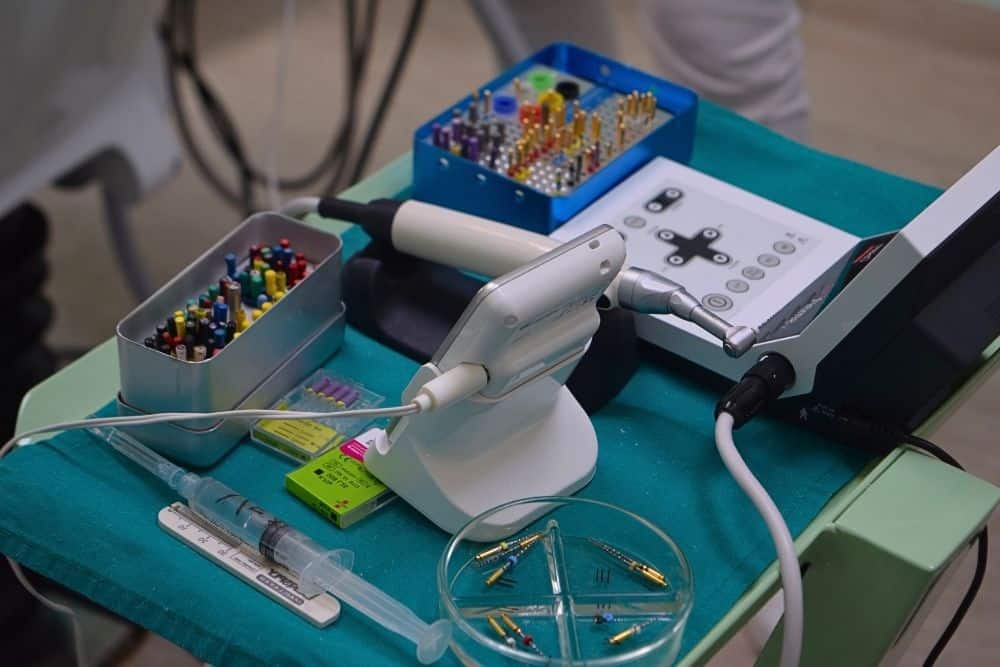
Photo: Dr. Veselinović Dental clinic, equipment and devices for endodontic therapy
After the initial examination and dental X-ray, the first step in endodontic therapy is removing the dental nerve. For many patients, just hearing about this procedure brings to mind an unpleasant and painful experience.
However, one of the greatest advantages of mechanicalendodontic therapy is that it simplifies the procedure, minimizes discomfort, and provides a much more comfortable experience for the patient.
Dental X-rays with the most advanced next-generation imaging system
Dr Veselinović Dental clinic is equipped with state-of-the-art endodontic devices and instruments. In addition, we use the latest high-resolution digital X-ray system.
The advantages of having an X-ray unit within our clinic include:
patients receive complete care in one location without wasting time traveling to a separate diagnostic imaging center elsewhere in the city;
the procedure is faster because X-rays are taken on-site, allowing immediate diagnosis and continuous monitoring of treatment progress;
digital radiography significantly reduces exposure to harmful radiation.
Mechanical endodontic therapy consists of the following stages:
After administering local anesthesia, the dentistremoves the decay and gains access to the dental nerve.
Using the specialized Dentsply Maillefer Thermaprep 2 system and other instruments, the dentist thoroughly cleans and precisely shapes the root canal.
If insufficient healthy tooth structure remains, the dentist places medication inside the tooth and schedules the next appointment. The medication is replaced as many times as necessary.
Once treatment is complete, the dentist fills the root canal with a special biocompatible resin called gutta-percha, creating a hermetic seal that prevents bacteria from entering the tooth from the oral cavity. Other sealing materials, including thermoplastic and bioceramic fillers, are also used to achieve complete sealing and promote regeneration of the surrounding tissues.
If tooth decay has damaged the crown so extensively that it cannot be restored even with a composite filling, the dentist recommends placing a dental crown.
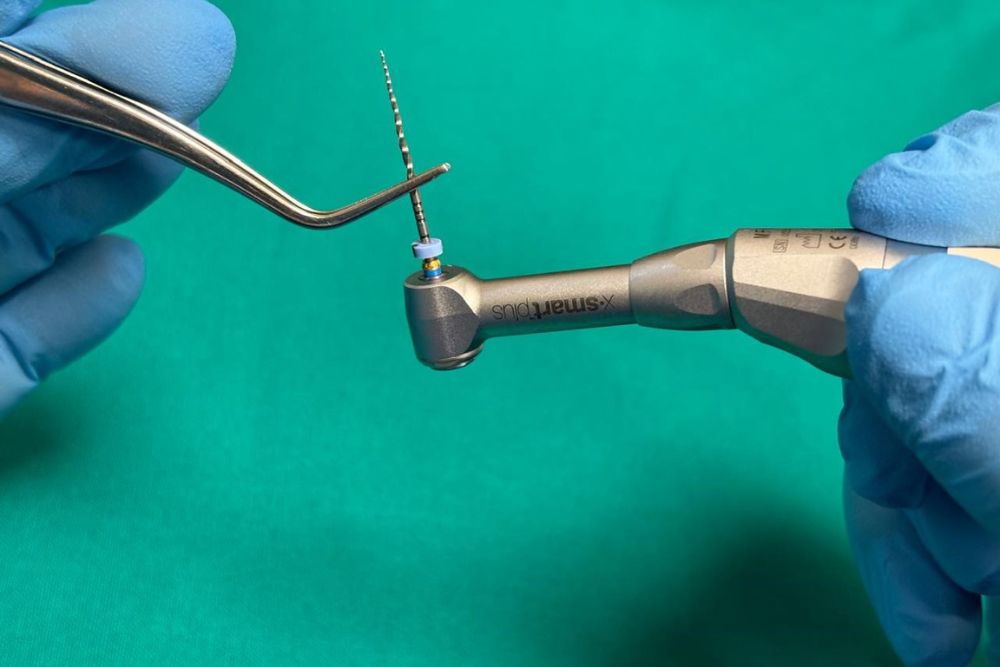
Photo: Dr. Veselinović Dental clinic, endodontic therapy device
Mechanical endodontic therapy delivers successful, long-lasting results. The tooth is treated within a relatively short period, and with proper care, it can remain functional for many years. Patients also experience far greater comfort during treatment than with conventional endodontic techniques, and recovery is significantly shorter.
Thanks to sophisticated equipment and modern mechanically guided endodontic therapy, many patients describe the procedure as feeling no more complicated than having a dental filling placed.
Mechanical endodontics – A case study from our practice
The X-rays below show our patient’s condition before and after mechanical endodontic therapy.
Photo: Dr. Veselinović Dental clinic, mechanical endodontics, before and after
The first X-ray reveals a radiolucent area around the apex (the tip of the tooth root), indicating that the infection had spread into the periapical region. The patient underwent modern mechanicalendodontic therapy using 5% sodium hypochlorite and calcium hydroxide medication.
A follow-up X-ray taken six months later (Fig. 2) showed that the signs of infection in the periapical area had decreased. New bone structures, known as bony trabeculae, had also formed. Together, these findings indicate a successful outcome in the treatment of the infected tooth root.
Conventional vs. mechanical endodontic therapy
Compared with traditional manual techniques, mechanical endodontic therapy offers significant advantages:
it uses a minimally invasive approach with smaller, more precise instruments;
it increases treatment success by combining specialized irrigation solutions and sonic waves that clean and disinfect even the most inaccessible and complex areas of the root canal system;
it provides more effective cleaning and better treatment outcomes, significantly reducing the risk of reinfection;
it shortens and simplifies the recovery period, allowing patients to return to their daily activities more quickly.
A new era of endodontics at Dr Veselinović Dental Clinic
The dentists at our clinic actively contribute to the evolution of endodontics by continuously following the latest technological innovations and modern treatment methods in contemporary dentistry.
Photo: Dr. Veselinović Dental clinic, instruments for endodontic therapy
Our primary goal has always been to preserve natural teeth whenever possible, and endodontics is one of the dental disciplines that makes this possible.
The overall oral health of our patients has always been our guiding principle. By providing the highest standard of dental care, we do everything we can to protect and improve it.



Comments
[…] Read more: Modern machine endodontics can save your tooth! >> […]
[…] Read more: Modern machine endodontics can save your tooth! >> […]