Dr. Veselinović’s dental clinic consists of a team of dedicated, diligent and passionate professionals, educated to work in various areas of dentistry.
Implant-supported prosthesis is a form of complete prosthetic rehabilitation for the entire jaw – lower and/or upper. An implant-supported prosthesis is used to replace all teeth in edentulous jaws.
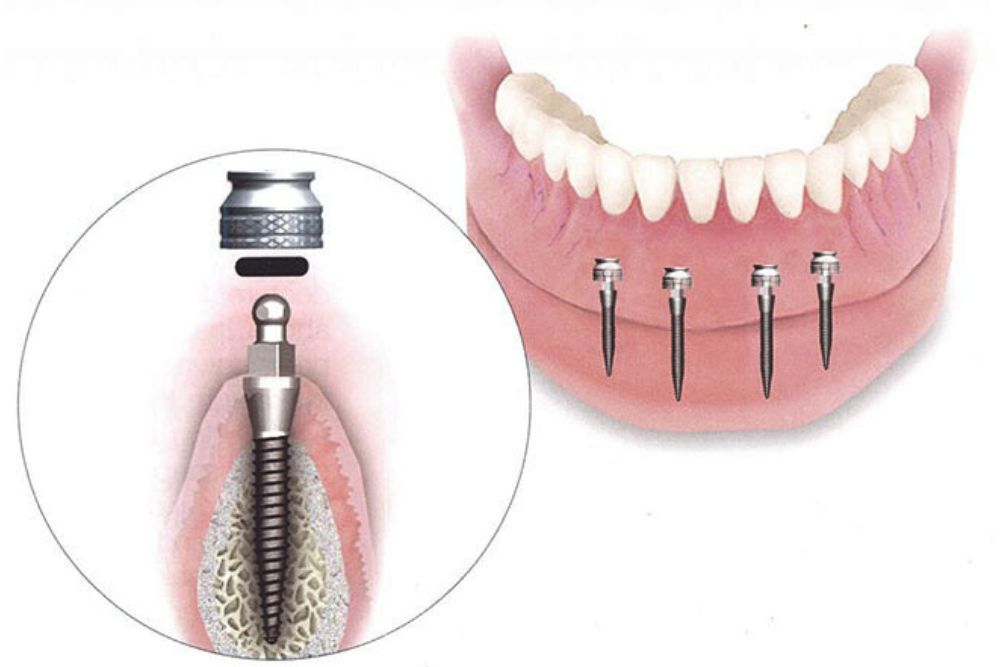
Mounted on four or six implants (titanium screws), it is highly stable and long-lasting.
What materials can an implant-supported prosthesis be made from?
An implant-supported prosthesis can be made from ceramics, porcelain, or acrylic.
Photo: Dr. Veselinović Dental Clinic
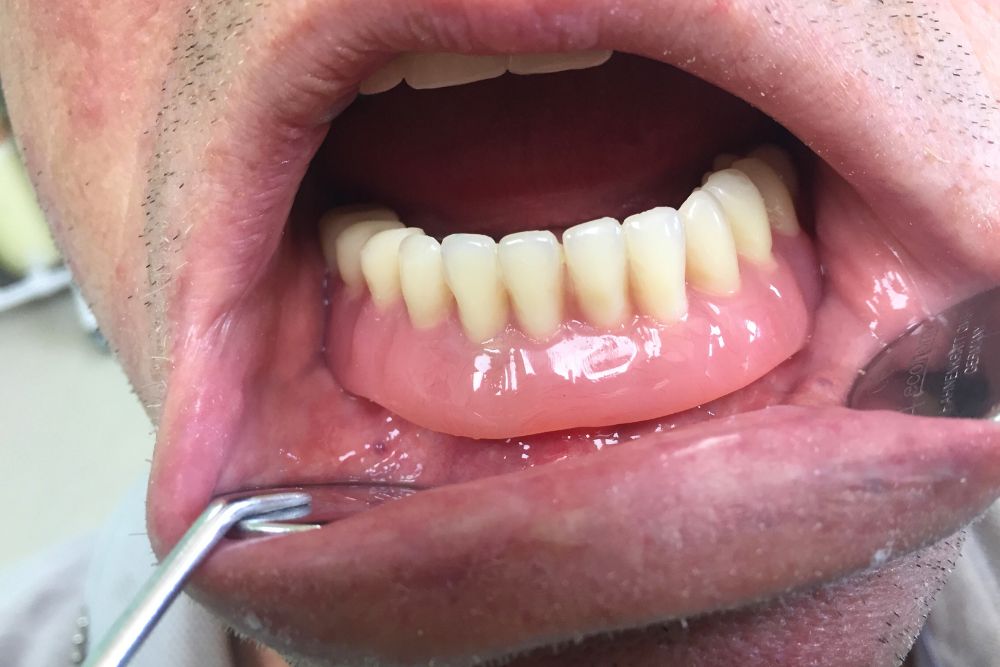
The acrylic part of the prosthesis mimics the gum (gingiva) onto which it rests, so its color is matched to appear as natural and cohesive as possible.
Common features of ceramic and porcelain prostheses
Ceramic and porcelain prostheses on implants share the following common characteristics:
they are designed to resemble natural teeth in appearance;
patients feel them as their own biological teeth;
they can be easily removed and cleaned by the patient when needed;
they are far more stable and secure than traditional removable full dentures;
comfort during wear is noticeable.
How is an implant-supported prosthesis different from a fixed prosthesis and a traditional removable prosthesis?
The main difference between an implant-supported prosthesis and a fixed prosthesis is that the implant-supported prosthesis can be removed and cleaned by the patient. A fixed prosthesis cannot be removed without the intervention of a dentist.
In comparison to a traditional removable denture, an implant-supported prosthesis offers an immeasurable advantage in terms of stability.
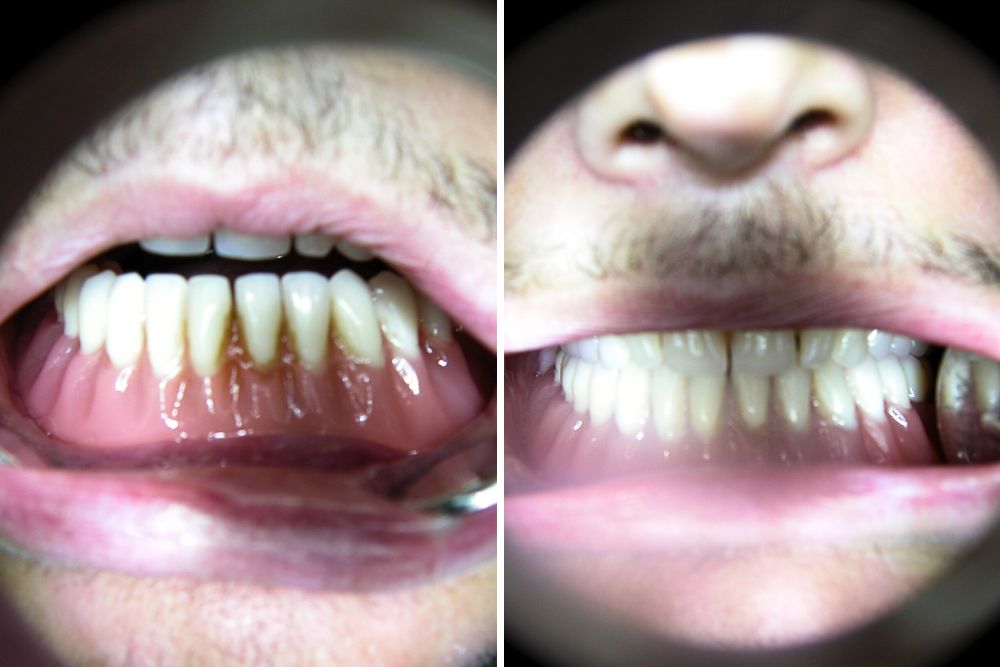
This feature instills a sense of security and renewed self-confidence in the patient, who no longer has to worry about their teeth falling out while eating, speaking, or laughing.
A diagnosis is made after a CT scan, which provides 3D images of the jaw and teeth.
After evaluating the overall oral condition (especially the volume and density of the jawbone and the presence of periodontal disease), a detailed implant-prosthetic plan is developed.
During the healing period when the titanium implants integrate with the bone tissue (osteointegration), the prosthesis is fabricated based on the impression of the jaw.
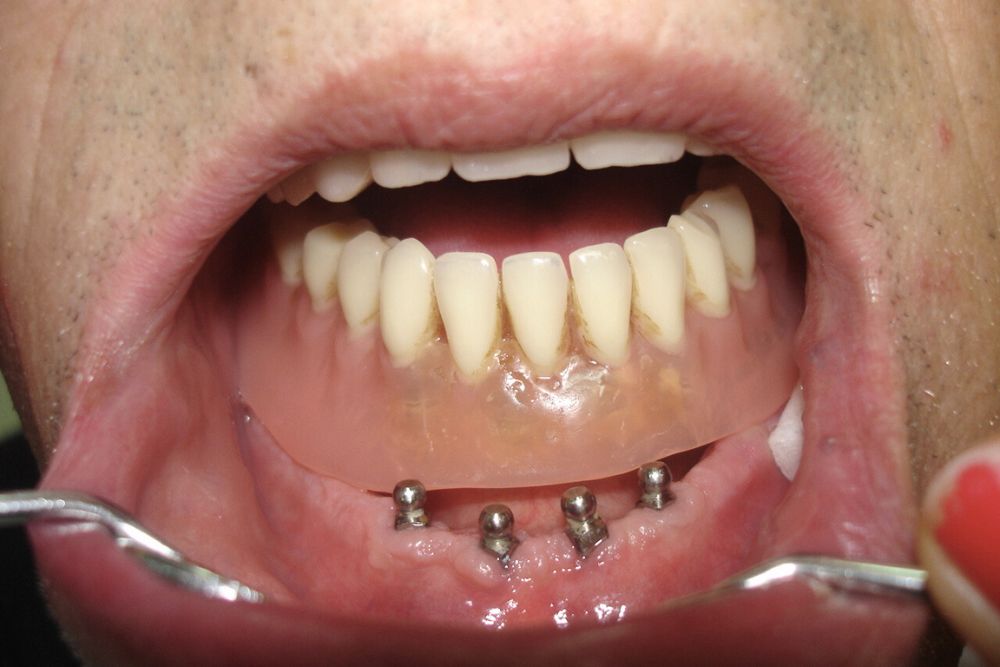
After the healing period (a minimum of three months for both jaws, or six months if bone grafting is required), abutments (locators/supports) are placed onto the implants. The prosthesis then rests on them. In the meantime, the patient wears a temporary prosthesis or an existing, older one.
The male and female compatible parts of the locator system make the prosthesis easy to remove and adjust.
By establishing this stable system, a complete restoration of one or both jaws is achieved at a significantly lower cost than fully implanting the entire jaw.
Although it may seem that artificial teeth do not require maintenance like natural ones, an implant-supported prosthesis still requires regular upkeep.
Photo: Dr. Veselinović Dental Clinic
Why is this the case?
The answer is simple. Bacteria accumulated in the mouth, around the abutments, and on the prosthesis itself can ultimately weaken the implant’s position, leading to the collapse of the entire implant-prosthetic structure and the inability to wear the prosthesis.
It goes without saying that an unsightly impression is to be avoided!
Therefore, basic hygiene (daily cleaning) is just as important as with natural teeth.
How do patients experience a locator-supported prosthesis?
Depending on their previous condition, patients react differently to a removable prosthesis.
Those who come to our clinic with only a few teeth can hardly wait to have all their teeth again.
Patients wearing removable prosthetic replacements feel great relief and security, as their prosthesis will no longer slip.
In any case, an implant-supported prosthesis is a great way to adjust and possibly transition to a fixed prosthesis.
For which there is already a proper foundation – more than half of the dental implants are in place.
How to achieve prosthetic rehabilitation of the jaws?
The most important step in replacing lost teeth is recognizing the problem and being ready to solve it.
The second step is deciding to visit an experienced dentist with extensive knowledge and a high success rate in interventions.
Only by choosing the right clinic, equipped with the most modern technology and using the best materials, can a patient be sure of the quality of the dental treatment.
If you’ve already decided to enhance your smile, just one call separates you from it.

Comments
[…] Read also: Implant-supported prosthesis – Cost-effective prosthetic rehabilitation for edentulous jaws >&g… […]
[…] Read also: Implant-supported dentures – An affordable solution for restoring edentulous jaws >> […]
[…] Read also: Implant-supported dentures – An affordable solution for restoring edentulous jaws >> […]