Dr. Veselinović’s dental clinic consists of a team of dedicated, diligent and passionate professionals, educated to work in various areas of dentistry.
What is an apicoectomy? It is an oral surgical procedure that involves removing the apex – the tip of the tooth root – together with the pathological process located within and around it. If your dentist recommends an apicoectomy, it is because it is the only alternative to tooth extraction.
You should not postpone the decision to undergo an apicoectomy because the infection around the tooth may spread and cause very serious dental problems.
What is an apicoectomy and when is it performed?
An apicoectomy is also known as root-end resection. Dentists perform this procedure to treat infections and pathological processes affecting the tooth root when conventional endodontic treatment has failed to eliminate the problem.
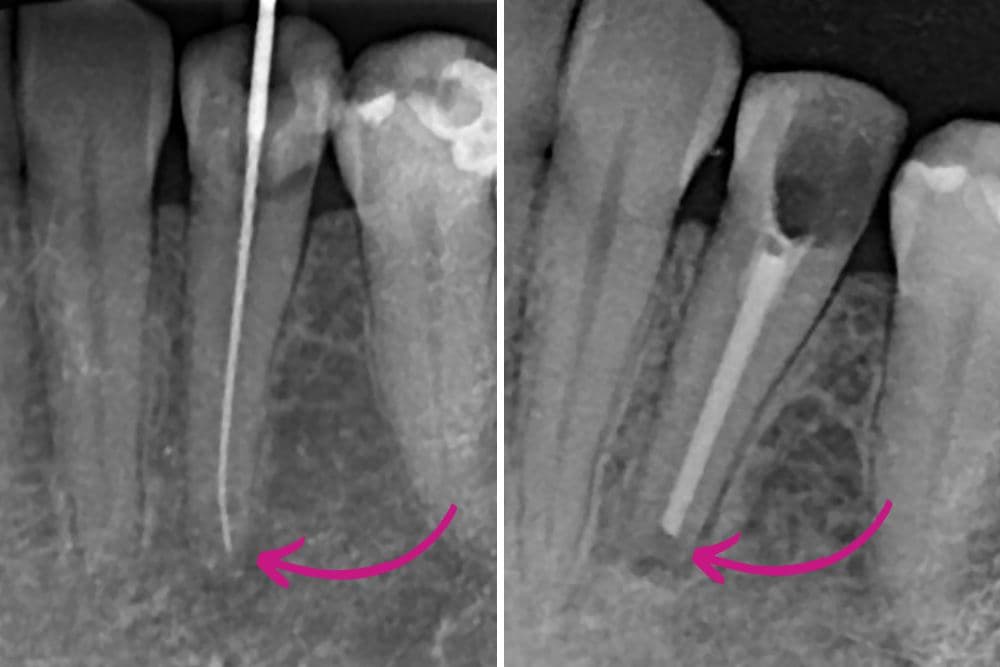
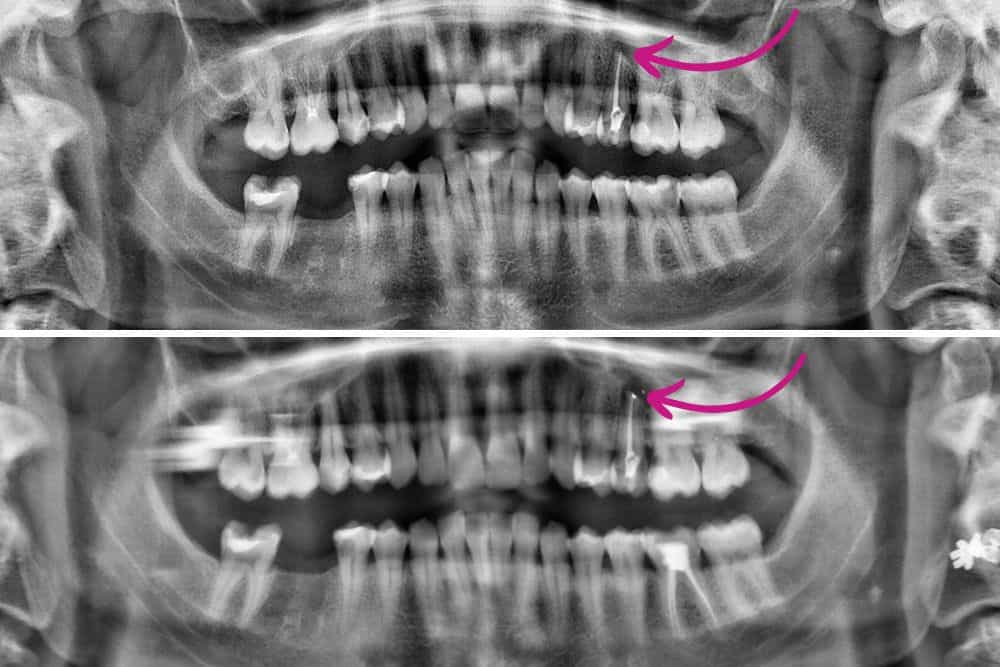
Photo: Dr. Veselinović dental clinic, apicoectomy (before and after)
An apicoectomy is therefore the last opportunity to avoid tooth extraction, as well as potential complications involving other teeth and the jawbone.
When performed correctly, this procedure preserves the natural function of the tooth and maintains the aesthetics of the jaw for many years.
How is root-end resection performed and is it painful?
Oral surgeons usually perform the procedure under local anesthesia and, in exceptional cases, under conscious sedation (for patients with specific psychological or physical conditions).
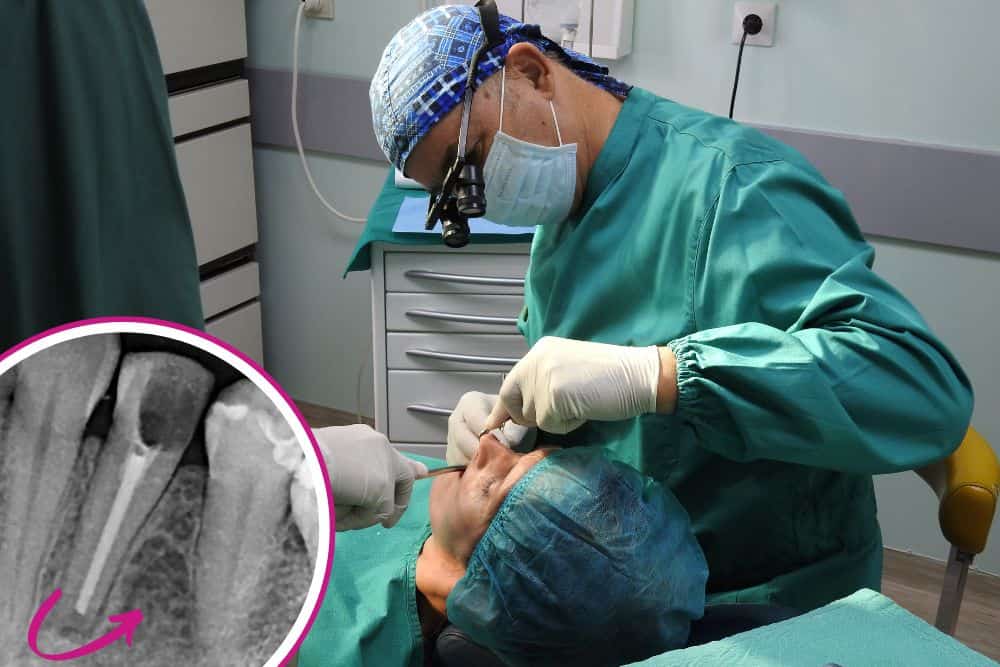
Using specialized instruments, the oral surgeon makes an incision in the gum tissue, accesses the tooth root, and removes the infected pulp and root tip. At the same time, the surgeon removes the cyst (pus-filled sac) that has developed in the surrounding tissue. After resecting the root tip, the surgeon cleans the root canal and seals it with a biocompatible filling material (gutta-percha) to prevent bacterial penetration and reinfection. The patient then undergoes a new radiographic examination to verify the postoperative condition of the tooth and jaw.
Photo: Dr. Veselinović dental clinic, apicoectomy (before and after)
Although this description of an apicoectomy may sound intimidating, the procedure itself is not. First of all, the patient is under anesthesia and does not feel any pain.
Secondly, highly experienced oral surgeons at Dr Veselinović dental clinic perform the procedure. They have successfully completed hundreds of similar surgeries. That is why you can feel completely confident when entrusting them with the health of your teeth and jaws.
An root-end resection (apicoectomy) usually takes between 30 and 90 minutes. The duration of the procedure depends on the tooth’s location, the size of the lesion, and the complexity of the root structure.
If you are still wondering what an apicoectomy is, how successful it is, and what postoperative recovery looks like…
An apicoectomy is a routine dental surgical procedure with a very high success rate (over 90%). After the procedure, patients may experience mild discomfort and notice slight swelling. These symptoms are a normal part of the healing process and usually disappear on their own within one or two days. However, highly sensitive patients may need pain-relieving medication such as paracetamol, ibuprofen, Caffetin, Rapidol, or Nimulid.
Patients must follow the antibiotic therapy prescribed by the oral surgeon in order to control the existing infection and/or prevent a new one.
Instructions after an apicoectomy
Immediately after surgery, patients should avoid driving, smoking, consuming hot beverages and hard foods, as well as engaging in physical exertion.
During the first 24 hours, patients should apply cold compresses according to the following schedule: keep the compress on for 10 minutes, then remove it for 10 minutes. Repeat this cycle for one hour, followed by a two-hour break.
The most important thing is to remain diligent and patient. Recovery does not take long, and most patients return to their usual activities after only a few days.
Patients return for a follow-up examination and suture removal 7–10 days after the procedure. During this period, they should pay special attention to maintaining oral hygiene.
After the first 24 hours, patients should gently clean the area around the treated tooth with a soft toothbrush and take care not to injure the gums. They should also avoid vigorous rinsing and the use of antibacterial mouthwashes.
Proper postoperative care improves treatment outcomes and helps ensure long-term dental health.
Why should you not be afraid of an apicoectomy and oral surgery in general?
For many people, visiting the dentist is already a stressful and frightening experience. The thought of undergoing any type of surgery can be even more overwhelming.
However, we assure you that you are in safe hands at Dr Veselinović dental clinic and that there is no reason to be afraid. The goal of our oral surgeons is to perform treatments and all necessary procedures – including an apicoectomy – that help save our patients’ teeth.
And, put a smile back on their faces!
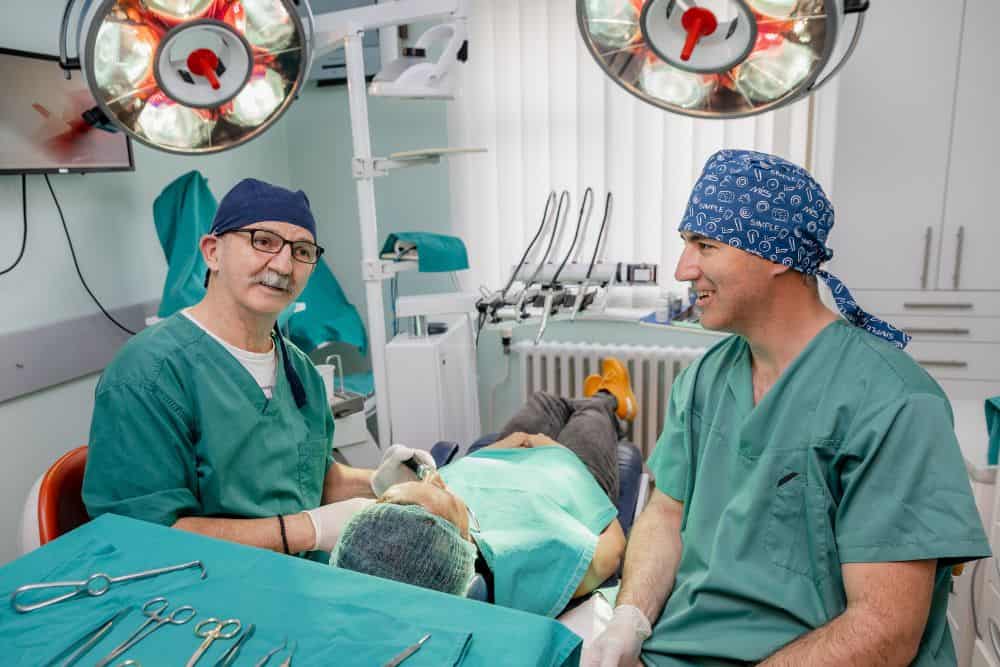
Photo: Dr. Ilija Veselinović and Dr. Milan Veselinović, oral surgeons and implantologists
This is because treating and preserving a tooth is simpler, faster, and more cost-effective than extracting it and replacing it with a dental implant or bridge. In this regard, timely diagnosis and a specialist evaluation significantly increase the chances of a successful outcome.
Unfortunately, in some cases, even an apicoectomy cannot save the tooth, and extraction becomes necessary. Even then, there is no reason to feel discouraged, as implantology and dental prosthetics at our clinic provide effective solutions.
Schedule your appointment today and consult with our oral surgeons—they will provide professional advice and do their best to help you in the most effective way possible.
[…] gangrene or apical infection becomes so advanced that neither mechanical endodontic therapy nor an apicoectomy can save the tooth. In such cases, the tooth must be extracted and replaced with a dental bridge or […]

Comments
[…] Read more: Do you know what an apicoectomy is and why it matters? >> […]
[…] gangrene or apical infection becomes so advanced that neither mechanical endodontic therapy nor an apicoectomy can save the tooth. In such cases, the tooth must be extracted and replaced with a dental bridge or […]
[…] Read more: Do you know what an apicoectomy is? >> […]
[…] Read also: Do you know what an apicoectomy is and why it matters? >> […]