Dr. Veselinović’s dental clinic consists of a team of dedicated, diligent and passionate professionals, educated to work in various areas of dentistry.
Baby teeth form the first dentition, which develops during the earliest stages of childhood (between 6 and 9 months of age). They are called baby teeth because, at this age, a child’s diet consists predominantly of milk.
Although temporary, baby teeth are extremely important because they:
help children chew;
contribute to speech development;
preserve space for permanent teeth;
influence the proper development of the jaws.
Therefore, parents need to understand their importance. This allows them to monitor their child’s dental development and identify tooth decay or any irregularities in tooth growth.
What do baby teeth look like, how many are there, and when do they fall out?
The first teeth to erupt in most babies are usually the lower central incisors (the left and right front teeth), followed by the upper central incisors, the lateral incisors, the canines, and the first and second molars. Approximately four teeth erupt every six months. By the end of this process, the primary dentition consists of 20 teeth in total (five in each quadrant of the jaw).
Baby teeth have no roots, are lighter in colour, and are smaller than permanent teeth. They begin to loosen and fall out around the age of 6–7. The replacement process is usually complete by the age of 12–13. In girls, this process begins slightly earlier than in boys.
Most baby teeth fall out naturally, which children often find exciting and fun. However, sometimes a permanent tooth begins to erupt before the baby tooth has fallen out. In such cases, parents should take their child to a dentist to have the baby tooth extracted. This helps prevent problems with the alignment and growth of permanent teeth.
What do baby teeth need to stay healthy from an early age?
Baby teeth care forms the foundation of lifelong oral health. It also plays an important role in preventing not only tooth decay but other diseases and problems. That is why parents should never neglect their child’s baby teeth. They should pay close attention to them as soon as the first incisors erupt.
Although special silicone toothbrushes for babies’ first teeth are available, dentists recommend using something much simpler for this purpose: a piece of gauze or a soft cloth and water.
Parents should clean their baby’s teeth twice a day, in the morning and evening. They can use gauze or a soft microfibre cloth dampened with lukewarm water, gently wiping the outer and inner surfaces of the teeth in the direction of growth. They should also clean the areas of the jaws where no teeth have erupted yet. This helps remove milk residue and food particles regularly. In turn, it prevents bacteria from accumulating and forming a film that could damage newly erupting teeth.
As more teeth appear, parents can introduce small toothbrushes with ultra-soft bristles designed for the child’s age. As for toothpaste, dentists recommend fluoride toothpaste in very small amounts: a rice-grain-sized smear for children under 3 and a pea-sized amount for older children.
Tips for stress-free care of your baby’s first teeth
Although the arrival of new teeth brings joy and relief after pain, stress, and sleepless nights, parents now face the task of caring for their child’s newly erupted teeth. To make this easier, we have put together several tips to help keep your child’s baby teeth healthy.
Brushing
Although brushing a baby’s teeth can be quite challenging, parents should not feel discouraged or give up after the first few difficulties.
Consistency is the key to maintaining oral health and establishing good lifelong hygiene habits.
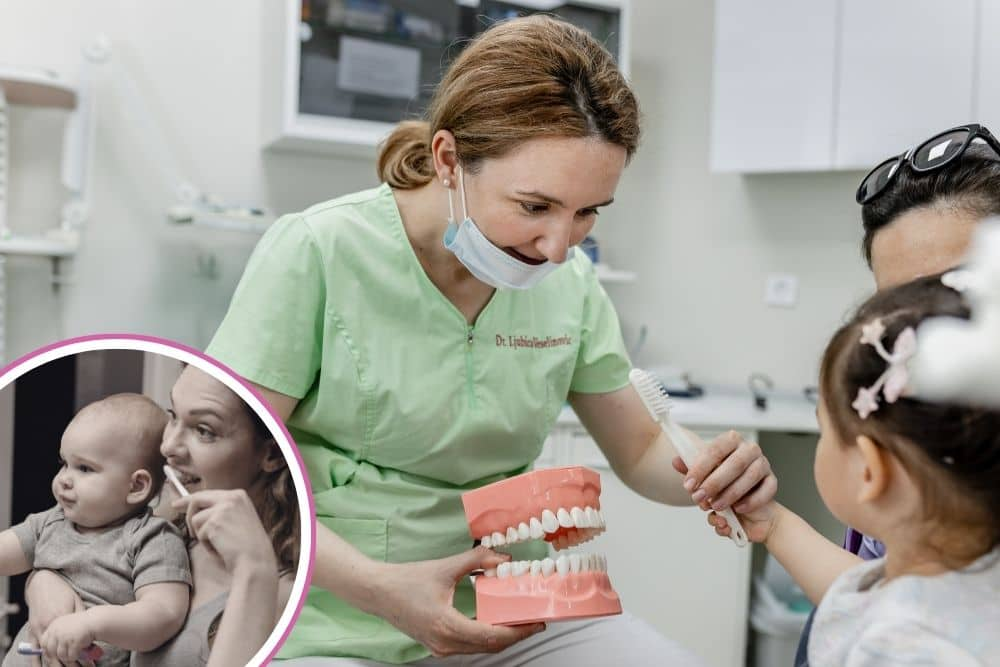
Photo: Dr Ljubica Veselinović and a young patient of Dr Veselinović Dental Clinic | Pexels, Mart Production
To begin with, we recommend that both parents take part in cleaning their baby’s teeth to make the experience as stress-free as possible. One parent can hold the baby in their arms in front of a mirror, keeping the child entertained and calm, while the other gently and slowly cleans the teeth. Over time, the parents can take turns brushing. They will gradually develop the necessary skills, smoother movements, and confidence.
Maintaining dental hygiene will no longer feel like an unpleasant chore. Instead, it will become a normal part of everyday life.
At first, the main goal is to help the baby get used to this new activity so that they accept it easily and do not become afraid. If parents approach the first cleaning sessions calmly, cheerfully, and without forcing the child, the baby is more likely to accept tooth cleaning as a fun new routine they can share with their parents.
Until the age of 7–8, parents should brush their child’s teeth themselves, carefully and thoroughly cleaning all tooth surfaces.
Parents can gradually encourage their child to become more independent by guiding their hand while brushing. Children should begin brushing their teeth independently, under parental supervision, at around 8 years of age. By then, their psychomotor development has usually reached the level of maturity required to coordinate fine movements, such as those involved in brushing teeth.
Dental visits
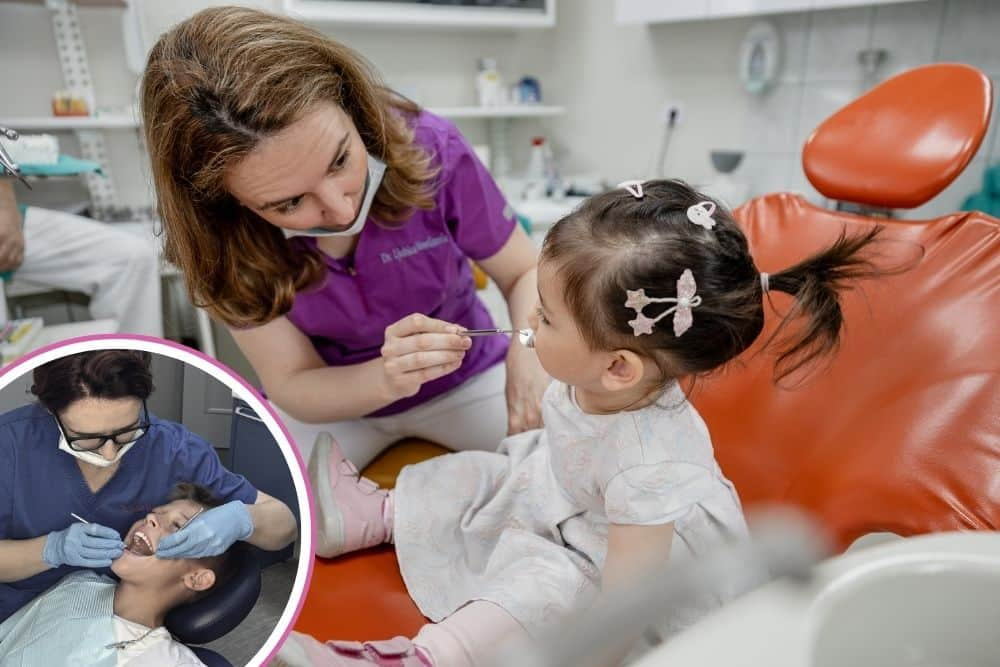
Your dentist is your baby’s friend and a trusted partner in protecting their dental health! Parents should always keep this in mind.
Your child’s first dental check-up should take place as soon as the first tooth erupts and no later than the age of 12 months.
Some parents may consider this too early or even unnecessary. However, do not let these doubts discourage you. Early dental check-ups are important for several reasons:
while the teeth are still healthy and pain-free, the child can become familiar with the dental practice and the dentist in a warm, safe, and friendly environment;
the dentist examines the entire dental system, including the teeth and jaws, assesses the risk of tooth decay, and identifies any irregularities that could cause problems in the future;
parents receive practical advice on the next steps, if necessary, as well as guidance on proper nutrition, oral hygiene, expected dental development, and other relevant matters.
Nutrition
Choosing the right foods in accordance with a child’s age and stage of dietary development is just as important as maintaining regular oral hygiene from an early age.
A diet rich in dairy products, high-quality meat and fish, and fruit and vegetables grown without pesticides is extremely important not only for healthy teeth but also for the proper development of the entire skeletal and muscular systems.
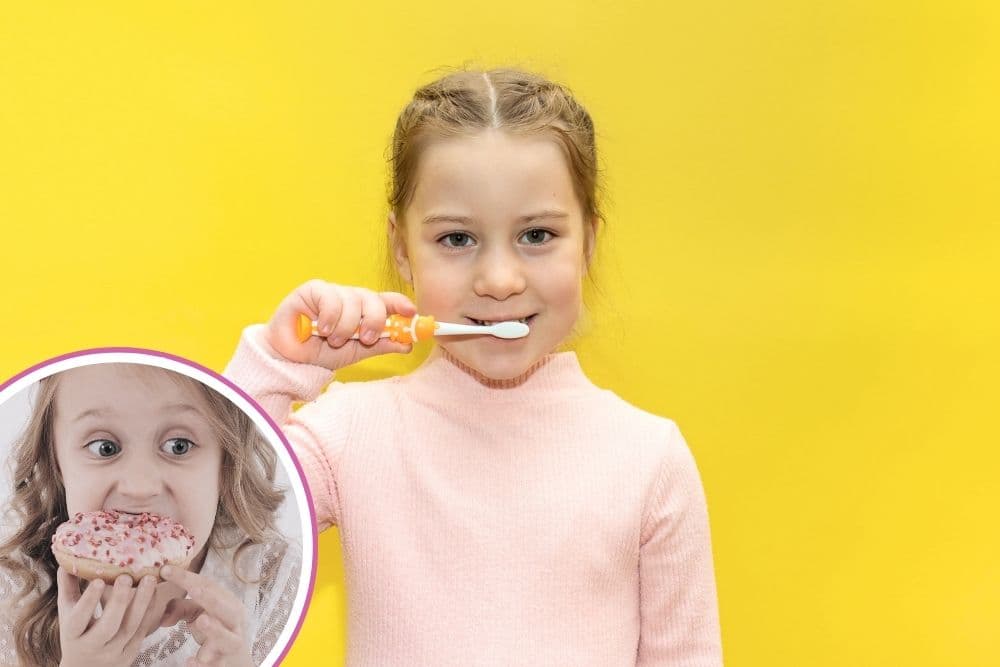
Foods containing refined sugar and highly processed foods, including sweets and salty snacks, are strongly discouraged!
Although parents may sometimes find it quicker and easier to reach for a bag of savoury snacks, biscuits, or juice instead of preparing a healthy fruit snack, this is a poor choice in the long run. Sugary foods and drinks stick to the teeth, allowing bacteria to multiply rapidly and relentlessly damage tooth tissue.
Alarming figures show that nearly 50% of preschool children under the age of 6 suffer from tooth decay. In many cases, they develop circular caries lesions, which can affect several surfaces of a tooth.
Parents play a decisive role in developing healthy habits and maintaining good oral hygiene! They can achieve the most in their children’s health education by making good dietary choices and setting a personal example through regular dental care. Children rarely follow advice just because they hear it. They imitate what they see.
Knowledge, commitment, and perseverance – Working together for healthy children’s teeth!
As we have already explained, baby teeth are much more than temporary teeth. They are a bridge to your child’s long-term oral and overall health and help lay the foundations for a healthy adulthood.
If baby teeth decay, children may experience pain and unpleasant breath from an early age. They may also face potential social isolation. Moreover, if their first experience with a dentist occurs only when they have a toothache, it may cause dental trauma and lead to a persistent, pathological fear of dental treatment.
However, parents should never dismiss tooth decay in baby teeth on the grounds that „the teeth will fall out anywayˮ.
For this reason, parents must remain committed to caring for their children’s primary teeth properly. They should educate themselves in time and work closely with paediatric dentists. Sound knowledge, experience, and dedicated professional dental care provide the best support for a child’s dental development.
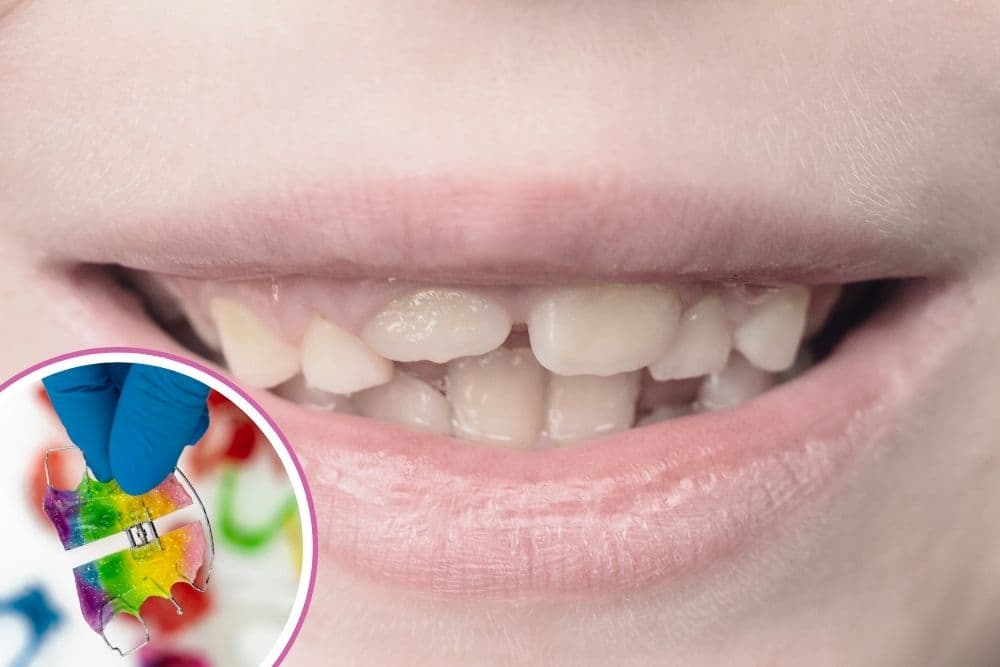
Regular check-ups allow dentists to identify not only cavities but also irregularities in tooth position and bite alignment at an early stage.
Photo: Vecteezy, Andrii Tsynhariuk | Unsplash, Katarzyna Zygnerska
If a child has an increased risk of tooth decay, particularly in the molars, the dentist can seal the fissures to protect the teeth. If the teeth are not growing into the correct positions, the dentist will refer the child to an orthodontist, who may recommend treatment with a removable appliance or other orthodontic appliances, as needed.
Paediatric and preventive dentistry at Dr Veselinović Dental clinic
As its name suggests, paediatric and preventive dentistry is an essential part of maintaining good oral health. This field aims to prevent problems affecting the teeth and jaws whenever possible, identify existing problems early, and treat them as soon as necessary.
Unfortunately, many parents overlook this fact and mistakenly believe that their children’s decayed teeth result from „weak rootsˮ or „bad geneticsˮ rather than – inadequate dental care.
We have seen how much parents benefit from being well-informed and consistently maintaining their children’s oral hygiene. We have patients who are 12 years old and have never had a single cavity! They are also on the right track to keeping their teeth healthy for years to come.
We do not wish to criticise anyone. Instead, we want to highlight the predictable consequences of neglecting children’s dental care:
tooth decay;
bad breath;
pain;
infection;
swelling;
premature tooth loss;
disturbances in the development of the permanent teeth and jaws;
problems with chewing and speech.
Even if you have not paid enough attention to your own teeth until now, it is time to change that. Become a positive example for your children, too.
The specialists at Dr Veselinović Dental clinic are happy to support you on this journey. Do not hesitate to get in touch with us. We care for the oral health of the whole family!